Why Koreans Ask Your Zodiac Animal, Not Just Your Age
If you spend time around Koreans, you will quickly notice that direct questions about age can feel slightly blunt. Instead of asking "How old are you?", people often ask "What year were you born?" or "What is your zodiac animal?" ().
This question serves a practical social purpose. In Korea, social hierarchy and speech levels ( and ) depend heavily on age relative to others. Knowing your zodiac animal allows Koreans to establish social standing instantly without making anyone feel singled out about their exact birth year.
Your zodiac animal, known as (tti), is rooted in the 12 Earthly Branches (), an ancient East Asian lunar cycle. Every year in the 12-year cycle belongs to a specific guardian animal, repeating sequentially from the Rat to the Pig.
In Korean culture, your connection to your birth animal begins even before you are born. Parents pay close attention to (taemong), or conception dreams, where animals like pigs, dragons, or tigers appear as prophetic symbols for the child's future. If you want to explore how parents interpret these dreams before a child arrives, read our deep dive on the Korean Taemong Experience.
Interactive Tool: Find Your Korean Lunar Zodiac Animal
Because the traditional Korean zodiac aligns with the lunar calendar rather than the solar calendar, the animal year resets in late January or February. If you were born in January or early February, your zodiac animal might actually belong to the previous solar year.
Use this interactive widget to calculate your exact animal, generate your Korean sentence, and hear native pronunciation.
Check Your Korean Zodiac
Enter your solar (양력) birthday, then see the lunar (음력) date, your 띠 animal, and a ready-made Korean sentence.
How to Say Your Zodiac Animal in Korean
Expressing your zodiac animal in Korean requires one simple sentence structure. You do not need complex grammar to state your .
The sentence structure breaks down as follows:
- (jeo) = I (Polite form)
- (neun) = Topic marker
- (tti) = Zodiac animal designation
- / (yeo-yo / i-e-yo) = Am / Is / Are (Polite ending)
, you will consistently use at the end of the sentence.
For example, if you were born in the year of the Dragon ():
(Jeo-neun yong-tti-yeo-yo.)
"I am a Dragon."
What Does Your Animal Say About You?
In traditional Korean folklore, each animal of the carries distinct personality traits and cultural expectations:
- : Associated with bravery, leadership, and protection against bad fortune.
- : Linked with intelligence, gentleness, and quick thinking.
- : Historically tied to wealth, financial abundance, and good fortune.
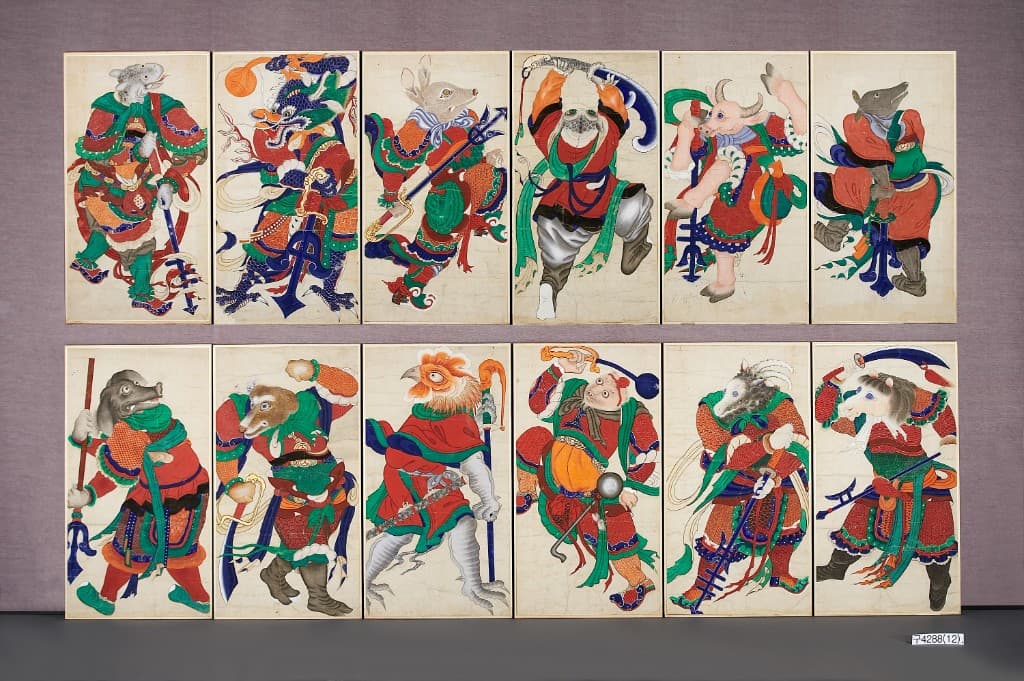
Artists across centuries documented these guardian animals in royal screens and folk art to protect homes and mark time.
Summary & Vocabulary Card
when meeting Korean speakers. Here is the complete list of all 12 Korean zodiac animals and their corresponding sentences:
| English | Hangul | Romanization | Korean Expression |
|---|---|---|---|
| Rat | Jwi | ||
| Ox | So | ||
| Tiger | Ho-rang-i | ||
| Rabbit | To-kki | ||
| Dragon | Yong | ||
| Snake | Baem | ||
| Horse | Mal | ||
| Goat | Yang | ||
| Monkey | Won-sung-i | ||
| Rooster | Dak | ||
| Dog | Gae | ||
| Pig | Dwae-ji |
📝 Homework Challenge
Use the calculator widget above to find your exact zodiac animal, tap Listen pronunciation ↗, and practice saying the sentence out loud three times.
Then type your full Korean sentence (for example, ) in the feedback section at the bottom of this page — Uncle Hangul reviews learner answers there.
Reactions & Next Steps
- Continue Reading: Once you know someone's 띠, the next social layer is speech level. Read When Do Koreans Switch from Jondaetmal (존댓말) to Banmal (반말)? to see how age and closeness change Korean honorifics in real life.
- Related: What is Tae-mong (태몽)? A Foreigner's Real Birth Dream Experience in Korea — how animal symbols appear even before birth.