Imagine waking up in a sunlit apartment in Seoul, turning to your spouse, and describing a dream so vivid it feels as though it occurred in real time.
You saw three house-sized elephants standing quietly in a courtyard. Their eyes were an unmistakable, piercing sky-blue, framed by soft, fluttery eyelashes. They stood behind a wooden garden fence that barely reached their knees—a barrier so small it offered zero physical protection.
You felt a surge of adrenaline at their sheer scale, yet as you locked eyes with them, their calm, gentle presence melted your fear into pure wonder.
This is precisely what happened to my Danish wife when we were living in Korea. She had never heard of Korean pregnancy folklore, nor did she speak fluent Korean at the time. Yet, while pregnant in Seoul, she experienced a quintessential Korean cultural phenomenon without even realizing it.
When she finished describing the scene over morning coffee, I smiled and said, "I think you just had a Tae-mong (태몽 - Birth dream)!"
Her response was pure bewilderment: "A what dream? What on earth is a Birth dream?"
1. Three Blue-Eyed Elephants and a Confused Danish Wife
In Western culture, dreams are generally treated as random psychological noise—the brain’s quiet way of clearing out stress, daily memories, or late-night snacks. If a pregnant woman in Denmark dreams of giant blue-eyed elephants, her friends might laugh it off, blame a heavy dinner, or suggest she get more rest.
In Korea, however, a dream during pregnancy is rarely dismissed as mere noise.
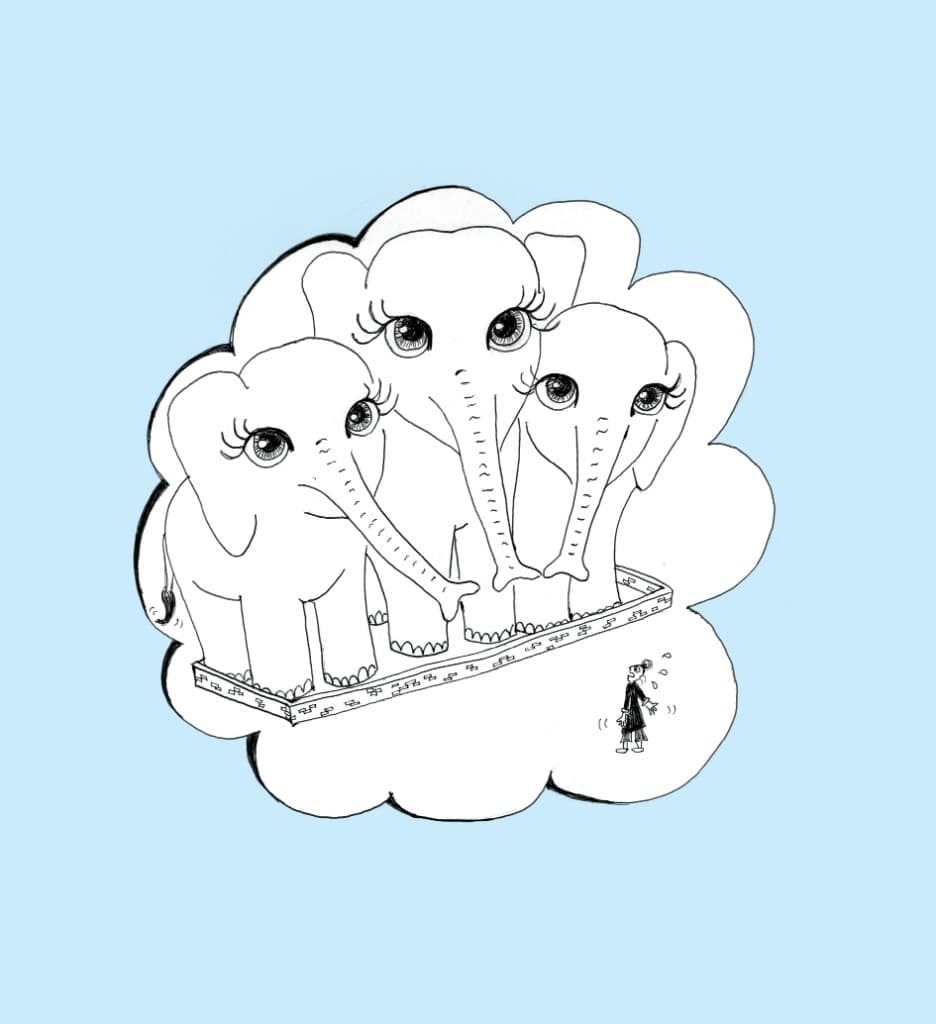
When my wife recounted her dream, the details were so crisp they felt painterly. The three elephants were immense—towering like two-story suburban houses. Yet, despite their intimidating size, they didn't break the flimsy knee-high fence. They simply leaned over it, blinking their giant blue eyes with curious affection.
She felt two overwhelming emotions at once: an instinctive shock at their colossal height, followed immediately by an overwhelming feeling that these gentle giants were bringing a peaceful gift.
In Denmark, there is no dictionary word for a dream that foretells a child's arrival. So when I explained that Korean culture has a specific, formalized category for this exact experience—a Tae-mong (태몽 - Birth dream)—she was fascinated. It was her first step into one of Korea’s most poetic cultural traditions.
2. What Makes Korea’s "Birth Dream" Culture So Unique?
Korea is one of the very few societies in the world where a Tae-mong (태몽 - Birth dream) is not just a quirky piece of regional superstition, but a universally recognized cultural milestone. It is an established linguistic concept listed in official dictionaries and integrated into everyday family life.
🇰🇷 Korean Vocabulary Card
태몽 (Tae-mong - Birth dream) — *Noun.* A conception or birth dream believed to announce the arrival of a new life, often foretelling the child's gender, personality, or future path.
태명 (Tae-myeong - Baby Nickname) — *Noun.* A temporary, affectionate nickname given to an unborn baby during pregnancy, often inspired by the Tae-mong itself.
An Active Cultural Milestone
In many global cultures, news of a pregnancy begins in a doctor's office with a medical test or an ultrasound screen. In Korea, the story often begins in the dream realm before a medical confirmation even takes place.
What makes the Tae-mong (태몽 - Birth dream) tradition truly fascinating is its collective nature. A Birth dream doesn't have to be experienced by the expecting mother alone. It is frequently dreamed by:
- The expecting father
- Maternal or paternal grandmothers
- Aunts, uncles, or close family friends
It is completely normal in Korea for an aunt to call a young married relative out of the blue and say, *"I had an extraordinary dream about a golden carp leaping out of a crystal lake last night. Are you by any chance pregnant?"*
Rather than feeling intrusive, receiving a Birth dream from a loved one is considered a deeply affectionate gift—a shared community welcome for an incoming soul.
3. Predicting Gender: Tigers, Dragons, Flowers, and Fruits
For centuries before modern ultrasound technology existed, Korean families relied on the symbolic language of the Tae-mong (태몽 - Birth dream) to guess whether a baby would be a boy or a girl. Traditional Korean folklore categorizes dream symbols based on their perceived physical energy, rarity, and traits.
[ TRADITIONAL TAE-MONG DYNAMICS ]
                  |
+-----------------+-----------------+
|                                   |
[ BOLD / POWERFUL ]            [ DELICATE / VIBRANT ]
Symbolizes: Boys               Symbolizes: Girls
(Tigers, Dragons,              (Flowers, Jewels,
Massive Trees)                 Fresh Fruits)
Traditional Symbols for Boys (아들)
Dreams predicting a boy typically feature fierce animals, massive natural landforms, or symbols associated with strength, high status, and bold leadership:
- 호랑이 (Ho-rang-i / Tiger) — Symbolizes immense courage, authority, and high social standing.
- 용 (Yong / Dragon) — The ultimate heraldic symbol of grandeur, wisdom, and exceptional achievement.
- 사자 (Sa-ja / Lion) — Represents protection, independence, and strong willpower.
- 코끼리 (Ko-kki-ri / Elephant) — Represents reliable strength, deep intelligence, and noble stability.
- 소나무 (So-na-mu / Pine Tree) — Symbolizes resilience, honor, and a long, healthy life.
Traditional Symbols for Girls (딸)
Dreams predicting a girl traditionally lean toward bright, elegant, precious, or quiet objects associated with grace and creativity:
- 꽃 (Kkot / Flower) — Represents beauty, artistic sensitivity, and warmth.
- 과일 (Gwa-il / Fruit) — Symbolizes abundance, charm, sweet nature, and fertility (especially when ripe and colorful).
- 보석 (Bo-seok / Jewelry, Gem) — Points to refined elegance, intelligence, and a cherished life.
- 물고기 (Mul-go-gi / Fish) — Symbolizes peace, adaptability, and smooth prosperity.
- 거울 (Geo-ul / Mirror) — Represents clarity of mind, honesty, and deep wisdom.
4. Traditional Folklore vs. A Mother’s Intuition
If you consult a traditional Korean dream dictionary, my wife's dream presented a fun puzzle.
Old-school Korean interpretation would point straight to the animal: 코끼리 (Ko-kki-ri / Elephant). Elephants are massive, grounded, powerful land animals. According to classic Korean folklore, dreaming of three giant elephants almost universally indicates a strong, bold boy!
However, cultural traditions often meet something even stronger: a mother’s instinct.
When we discussed the dream with Korean friends and elders, everyone confidently predicted a son. But my Danish wife shook her head with absolute certainty.
*"I know what the traditional rules say,"* she laughed. *"But those long fluttery eyelashes, those sky-blue eyes, and the quiet sweetness of how they looked over that tiny fence... I know in my gut there is a baby girl elephant in my belly."*
A few weeks later, the medical ultrasound confirmed what her maternal intuition had already decided. Traditional dream folklore insisted on a boy, but the mother's heart read the dream's true tone. We were blessed with a healthy, wonderful baby daughter!
[ Traditional Korean Interpretation ]  --->  Massive Elephant = Boy (아들)
[ Danish Mother's Intuition ]         --->  Gentle Blue Eyes = Girl (딸)
[ The Final Outcome ]                 --->  A Healthy, Bright Daughter!
5. A Poetic Welcome to New Life
Living across different cultures often reveals how fascinating life's major milestones can be when viewed through new eyes.
For my Danish wife, experiencing a Tae-mong (태몽 - Birth dream) transformed an abstract Korean custom into an unforgettable personal memory. It added a layer of artistic wonder to the long months of pregnancy. Instead of viewing those nine months purely through medical appointments and developmental checklists, we had a story—a visual memory of three giant blue-eyed elephants standing peacefully by a low wooden fence.
A Birth dream is not about rigid superstition or scientific accuracy. At its heart, it is a poetic way for a family and a community to wrap an incoming child in anticipation, imagination, and warmth before they even take their first breath.
Enjoyed This Story?
If you found this look into Korean Birth dream culture interesting, let us know by clicking the reaction buttons below!
- Visual Stories: Want to see more artwork inspired by life in Korea? Check out illustrator Sofie Fribo’s work on Instagram: @sofiefribo_illustration.
- Up Next on UncleHangul: How do Korean parents choose a baby's temporary "womb name" before their official legal name is decided? Stay tuned for our upcoming guide on Tae-myeong (태명 - Baby Nickname)!